Two regulatory shifts in 2026 are reshaping what a "compliant" luminaire means — and both matter the moment a buyer sources for the EU or for the Chinese market.
1 · The EU: "smart" is now a condition of entry
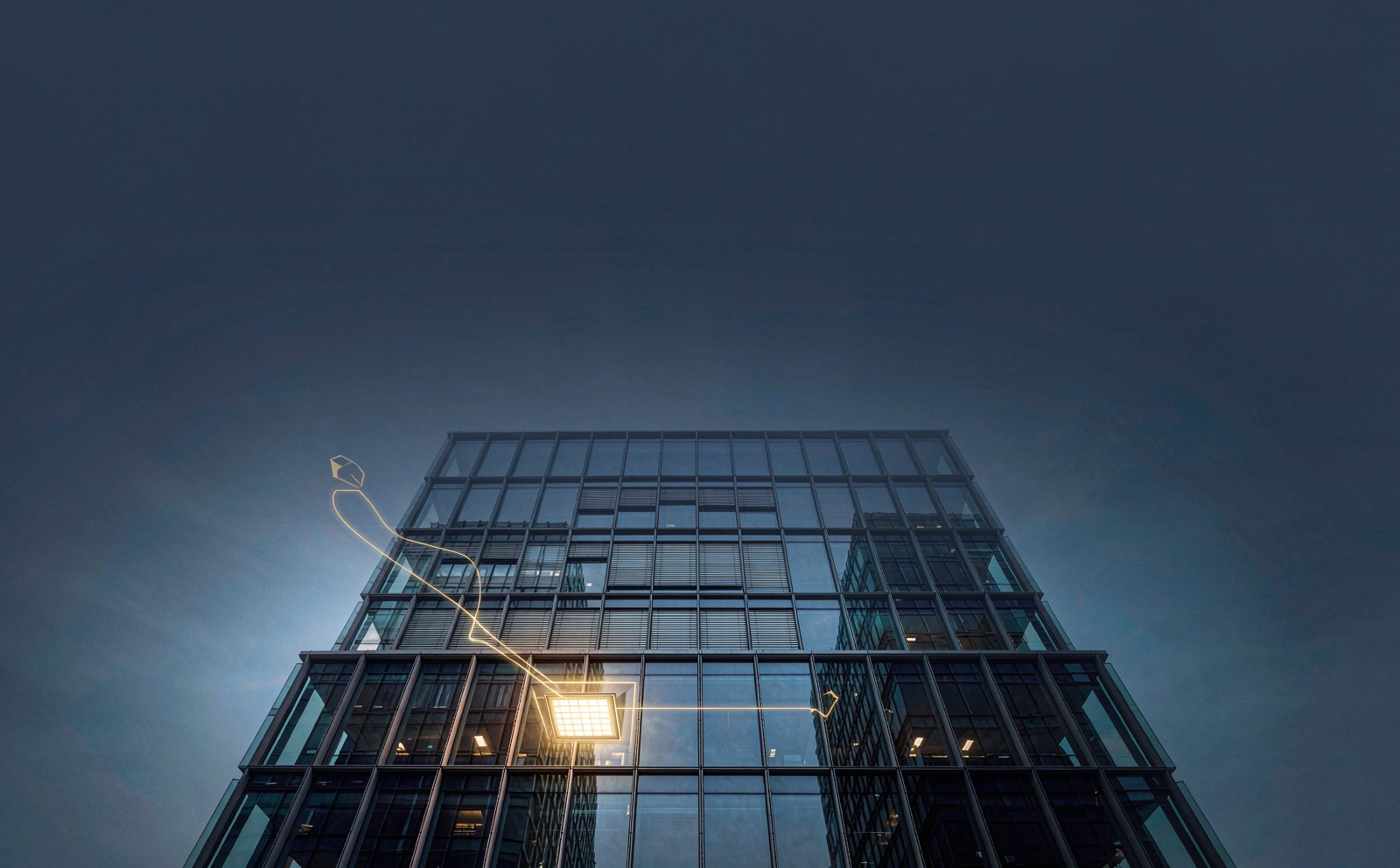
From May 2026 the revised Energy Performance of Buildings Directive (EPBD) entered its full implementation phase across EU member states. Its core requirement is blunt: all new commercial buildings must install automatic lighting controls and building automation. A standalone "smart bulb" that cannot join the building's system no longer meets the law.
For luminaire makers this changes the definition of the product:
- Networkable & integrable — must plug into the building management system, adapt to occupancy and daylight, and align with the EU Smart Readiness Indicator (SRI) and global protocols such as Matter.
- D4i Gen 2 drivers — DALI dimming plus DALI Part 250–253 energy metering and fault diagnosis; the driver must be independently mounted with pluggable terminals and its own thermal path, not shared with the LED module.
The Ecodesign for Sustainable Products Regulation (ESPR) layers on top, demanding environmental-impact disclosure across the full lifecycle — from raw material to recycling.
Bottom line for importers: from 2026, sourcing for EU new-build means buying integrable data nodes, not just light fittings. Drivers without D4i certification lose market access first.
2 · China: a higher efficiency floor (GB 30255-2026)
China's mandatory national standard Minimum Energy Efficiency Values and Grades for LED Products for Indoor Lighting (GB 30255-2026) was published in March 2026 and takes effect on 1 September 2027, replacing GB 30255-2019. Three changes stand out:
- Wider scope — now covers small-beam-angle LED downlights (spotlights), LED high-bay lights, replacement double-ended LED tubes, and dimmable / tunable / feature-rich LED indoor products.
- Tighter thresholds — higher Grade 2 requirements and a raised Grade 3 entry bar, with efficiency corrections for high-CRI, anti-glare and smart-control products.
- Standby power — a new standby-energy requirement, extending efficiency from "runtime" to "all-time".
3 · What this means for buyers
Market signals back the shift. China's lighting exports in Q1 2026 were about US$11.4 billion (down 3.5% YoY), yet EU-bound shipments rose ~8%, and at the Hong Kong Spring Lighting Fair nearly half of exhibitors expected sales growth over the next two years, with buyers willing to pay a ~30% premium for smart lighting (per industry-media reporting).
- Audit your drivers. For EU new-build, confirm D4i Gen 2 and SRI/Matter alignment before committing tooling.
- Plan for the 2027 China floor. Even non-EU programmes should spec to the tighter GB 30255-2026 bands to avoid re-tooling later.
- Treat certification as part of the product. CE+LVD+EMC+RED (for wireless), RoHS, WEEE, and now lifecycle data — prepare them in parallel, not after.
Sources: industry-media synthesis of CNR / Xinhua / People's Daily (GB 30255-2026), Lighting China and NSTL portals (EU EPBD transposition), and HKTDC market reporting. Verify current thresholds against the official standards text before specification.
- EU EPBD
- GB 30255-2026
- smart lighting
- D4i
- lighting compliance